
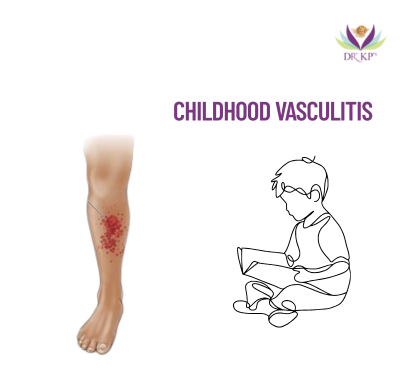
Childhood vasculitis is a group of rare disorders in which a child’s immune system mistakenly attacks blood vessels, causing inflammation and damage in organs such as the skin, kidneys, intestines, lungs, brain, and heart. Because symptoms can look like many common illnesses—fever, rash, joint pains, tummy ache—it is often missed or diagnosed late. In India, published series report vasculitis in only a small fraction of paediatric rheumatology cases, but with significant complications if not recognised early.
Parents and frontline doctors need to know the early warning signs so that children with vasculitis are referred quickly to paediatric specialists for proper evaluation and treatment.
What Is Childhood Vasculitis?
Vasculitis literally means “inflammation of blood vessels.” In children, this inflammation is usually autoimmune—the immune system becomes overactive and targets vessel walls.
Key features:
- Vessel walls become swollen and leaky.
- Blood flow to tissues is reduced or blocked, causing pain, rashes, organ damage, or even strokes.
- Symptoms vary widely depending on which vessels (small, medium, or large) and which organs are affected.
Paediatric vasculitis may be primary (a disease on its own, like IgA vasculitis or Kawasaki disease) or secondary to infections, drugs, or other autoimmune conditions.
Types of Childhood Vasculitis
Doctors classify childhood vasculitis based on the size of the main vessels involved:
- Small‑vessel vasculitis
- IgA vasculitis (Henoch–Schönlein purpura) – most common systemic vasculitis in children.
- ANCA‑associated vasculitis (rare in children).
- IgA vasculitis (Henoch–Schönlein purpura) – most common systemic vasculitis in children.
- Medium‑vessel vasculitis
- Kawasaki disease – a leading cause of acquired heart disease in children.
- Polyarteritis nodosa.
- Kawasaki disease – a leading cause of acquired heart disease in children.
- Large‑vessel vasculitis
- Takayasu arteritis – involves the aorta and its branches, reported from Indian paediatric centres.
- Takayasu arteritis – involves the aorta and its branches, reported from Indian paediatric centres.
Some cutaneous‑only vasculitides affect skin vessels without major internal organ involvement, but even these may occasionally progress, so evaluation is essential.
How Common Is Childhood Vasculitis?
Vasculitis in children is uncommon worldwide and in India:
- Older Indian paediatric rheumatology data show vasculitis in a small subset of referred cases, with IgA vasculitis and Kawasaki disease being most frequent.
- IgA vasculitis typically affects children under 10 years, with most series reporting a peak between 4 and 7 years.
- Kawasaki disease clusters have also been reported from India, especially in children below 5 years.
Because it is rare and presentation is variable, clinicians must think of vasculitis in any child with unexplained multi‑system inflammation.
Common Symptoms and Red Flags
The clinical picture depends on the type of vasculitis, but certain patterns should raise suspicion:
General (“constitutional”) symptoms
- Persistent fever, often more than 5 days.
- Marked fatigue, weight loss, poor appetite.
- Irritability or lethargy.
Skin signs
- Palpable purpura – raised, non‑blanching purplish spots, usually on legs and buttocks (classic for IgA vasculitis).
- Petechiae (pinpoint red dots), ulcers, livedo reticularis (mottled net‑like pattern).
- In Kawasaki disease, polymorphous rashes, red palms/soles, and fingertip peeling are typical.
Joint and muscle symptoms
- Joint pain or swelling (knees, ankles, wrists).
- Muscle aches or tenderness.
Gastrointestinal symptoms
- Colicky abdominal pain, often around the belly button.
- Vomiting or blood in stools (seen in IgA vasculitis).
Kidney involvement
- Blood in urine (visible or microscopic).
- Protein in urine, swelling around eyes or legs.
Nervous system and other organs
- Headaches, seizures, behavioural or school‑performance changes (brain involvement).
- High blood pressure, weak pulses, arm/leg claudication (large‑vessel disease such as Takayasu arteritis).
Any combination of unexplained fever + rash + joint pain + abdominal or kidney signs should prompt consideration of vasculitis.
Specific Examples Parents Should Know
IgA Vasculitis (Henoch–Schönlein Purpura)
- Most common systemic childhood vasculitis.
- Hallmark features:
- Palpable purpura on legs/buttocks.
- Joint pain or swelling.
- Tummy pain, sometimes blood in stools.
- Varying degrees of kidney involvement.
- Palpable purpura on legs/buttocks.
Most children recover fully, but kidney monitoring for several months is essential to catch rare long‑term complications.
Kawasaki Disease
- Affects medium‑sized arteries including coronary arteries of the heart.
- Presents with >5 days of fever plus features like rash, red eyes without discharge, “strawberry tongue,” red cracked lips, swollen hands/feet, and enlarged neck nodes.
- Untreated, it can cause coronary artery aneurysms; early IVIG treatment dramatically reduces this risk.
Takayasu Arteritis
- Large‑vessel vasculitis involving the aorta and major branches, reported from Indian children and adolescents.
- Early symptoms: fatigue, fever, weight loss, limb pain.
- Later: absent or weak pulses, blood‑pressure differences in limbs, hypertension, stroke‑like episodes.
How Is Childhood Vasculitis Diagnosed?
There is no single test for vasculitis. Diagnosis relies on piecing together:
1) Detailed history and examination
- Recent infections, drugs, vaccinations, family history.
- Blood pressure in all limbs, pulse quality, heart and lung findings.
- Careful skin, joint, neurological, abdominal, and eye examinations.
2) Basic laboratory tests
- Blood counts, ESR/CRP (inflammation markers).
- Kidney and liver function tests.
- Urinalysis (looking for blood/protein).
3) Autoimmune and infection tests
- ANCA, ANA, complement levels in suspected systemic vasculitis.
- Tests for possible infections (hepatitis, streptococcus, etc.) that can mimic or trigger vasculitis.
4) Imaging
- Ultrasound or CT/MRI angiography to visualise affected arteries in medium‑ and large‑vessel vasculitis.
- Echocardiography to check coronary arteries in Kawasaki disease.
5) Biopsy
- Skin or organ biopsy may show classic vessel wall inflammation and help confirm diagnosis, especially in cutaneous vasculitis and IgA vasculitis.
Because many conditions can mimic vasculitis, paediatric rheumatologists use classification criteria and exclusion of other diseases before labelling a child with primary vasculitis.
Treatment Options
Treatment aims to control inflammation quickly, protect organs, and prevent relapses.
1) Supportive Care
- Pain relief, hydration, nutrition.
- Blood‑pressure control and management of complications (e.g., GI bleeding, kidney dysfunction).
2) Corticosteroids
- Mainstay for many vasculitides; given orally or intravenously depending on severity.
- Used in IgA vasculitis with severe abdominal or kidney involvement, Kawasaki disease (as adjunct in high‑risk cases), Takayasu arteritis, and ANCA‑associated vasculitis.
3) Other Immunosuppressive / Biologic Agents
For severe or refractory disease, options may include:
- Cyclophosphamide, azathioprine, methotrexate, mycophenolate.
- Biologics such as rituximab or anti‑TNF agents in selected cases.
Choice depends on vasculitis type, organ involvement, and response.
4) Disease‑Specific Therapies
- IVIG and aspirin for Kawasaki disease to protect coronary arteries.
- ACE inhibitors or ARBs in IgA vasculitis with significant kidney involvement, under specialist care.
Treatment is usually long‑term, with gradual tapering as inflammation settles and imaging improves.
Long‑Term Outlook and Follow‑Up
Outcome varies by type and severity:
- Many children with IgA vasculitis recover completely, but a minority develop chronic kidney issues, so urine and BP checks over 6–12 months are advised.
- In Kawasaki disease, children treated promptly have an excellent prognosis; those with coronary changes need long‑term cardiology follow‑up.
- Large‑vessel and ANCA‑associated vasculitis often require years of follow‑up, with periodic imaging and lab tests to monitor disease activity and treatment side effects.
Early recognition and referral to a paediatric rheumatology or nephrology team greatly improve outcomes.
FAQ
1) When should parents suspect something more serious than a simple viral fever or rash?
Parents should be concerned if a child has fever lasting more than 5–7 days, especially when combined with unusual rash (purplish spots or widespread unusual patterns), joint pains, tummy pains, blood in stools or urine, severe headaches, or very high blood pressure. Such multi‑system involvement is not typical of simple viral illnesses and warrants prompt evaluation, ideally including urine tests, blood work, and specialist opinion.
2) Is childhood vasculitis always lifelong, or can it go away?
Many forms of childhood vasculitis—such as IgA vasculitis and Kawasaki disease—often have a limited course, and with proper treatment and follow‑up, most children return to normal life with no or minimal long‑term issues. However, some vasculitides like Takayasu arteritis or ANCA‑associated vasculitis may follow a chronic, relapsing pattern, requiring long‑term monitoring and treatment adjustments. Early diagnosis and tailored therapy help minimise organ damage and improve quality of life in both scenarios.
3) Can vaccines or infections trigger vasculitis in children?
Certain infections and, rarely, vaccines can precede the onset of vasculitis, most likely by stimulating an abnormal immune response in genetically susceptible children. However, for the vast majority, vaccines remain far safer than the diseases they prevent, and expert groups consistently emphasise that the benefits of vaccination greatly outweigh the small and uncertain risk of triggering vasculitis. Parents should follow national immunisation schedules and discuss specific concerns with paediatric specialists rather than delaying routine vaccines.