
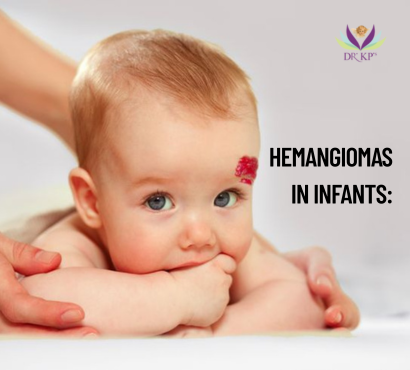
Hemangiomas, often called “strawberry marks,” are the most common benign tumors in babies. While many resolve naturally, they can sometimes grow quickly or cause complications if located near vital organs, the eyes, or airways. Understanding hemangiomas—when they are harmless, when intervention is needed, and which treatments are available—enables parents and care teams to respond with confidence rather than fear.
What is an Infantile Hemangioma?
An infantile hemangioma is a noncancerous, abnormal growth of blood vessels. It appears as a bright red, rubbery bump on the skin (“strawberry hemangioma”) or as a bluish lump beneath the surface if deeper. These marks usually emerge within a few days to weeks after birth, grow for several months, and then fade over years.
Types:
- Superficial (cutaneous): Red, raised, and bumpy—most common and visible.
- Deep (subcutaneous): Blue or purple under the skin, causing swelling but less red color.
- Mixed: Features of both types; sometimes can occur internally (liver, bowel, etc.).
Causes: Why Do Some Infants Get Hemangiomas?
The precise reason is still unclear, but scientists believe hemangiomas are due to abnormal development of blood vessels during pregnancy. Factors possibly contributing include:
- Premature birth (low birth weight babies have higher risk)
- Female sex (more common in girls)
- Multiple births (twins, triplets)
- Maternal factors (advanced age, certain pregnancy complications)
There is no link to drugs, vaccines, or lifestyle habits during pregnancy.
Recognizing Hemangiomas: Symptoms and Signs
- Most become visible within the first weeks or months of life.
- First appear as red or blue flat patches.
- Undergo a rapid growth phase within the first 3–6 months, developing into soft, spongy, distinct lumps.
- Rest phase: Growth stops; color may deepen.
- Involution: Gradual shrinking starts after a few months and can last up to 7–10 years, often leaving behind faded skin or mild textural changes.
Important Note
- While many infants have a single hemangioma, some may have several.
- Some hemangiomas can be deep or in organs, making detection and management more complex.
Potential Complications
While most hemangiomas are harmless and fade away, some cause problems such as:
- Ulceration: Open sores leading to pain, bleeding, risk of infection—higher risk if hemangioma is in friction zones (mouth, nappy area, under arms).
- Bleeding: Occasional if injured or ulcerated.
- Obstruction: If located near the eye (can affect vision), airway (can affect breathing), ear, nose, or mouth (can cause feeding/speech problems).
- Disfigurement: Especially when large or facial; may have psychological or social impact.
Rare but serious complications include involvement of organs (liver, GI tract) and syndromic associations (PHACES, LUMBAR syndromes).
How Hemangiomas are Diagnosed
- Clinical exam: Most are diagnosed from appearance and growth pattern.
- Ultrasound or MRI: Used to assess deep or atypical hemangiomas, particularly for those near the eye, airway, or in vital organs.
- Biopsy: Rare; only if diagnosis is unclear or there’s suspicion of other conditions.
Treatment: When and How
Observation (“Active Nonintervention”)
- Most uncomplicated hemangiomas don’t need active treatment.
- Parents are advised to monitor closely for changes, take periodic photographs, and maintain gentle care (keep clean, trim nails).
Medical Treatment
Indications:
- Complications (bleeding, ulceration, infection)
- Functional risk (e.g., vision, breathing, feeding affected)
- Risk of disfigurement (face, lips, genitals)
- Rapid, unstable growth
First-line Therapies:
- Oral Beta-blockers (Propranolol): Now the gold standard for problematic hemangiomas; shrinks marks, with improvement in weeks to months. Used under strict pediatric supervision for side effect monitoring.
- Topical Beta-blockers (Timolol): Suitable for small, superficial lesions.
- Corticosteroids: If beta-blockers can’t be used; oral or injected in certain cases.
- Laser Therapy: For ulcerated, bleeding, or superficial residual marks after involution.
- Surgery: Rare; only for persistent, functionally serious, or scarring lesions after medical options fail.
Supportive Care:
- Emollients to reduce skin dryness.
- Preventing infection through gentle hygiene.
- Counseling for parents—most hemangiomas resolve with time.
Indian Context: What Parents Should Know
- Many doctors in India now follow international guidelines for early observation and referral.
- Access to specialist care pediatric surgeon may be necessary for complicated cases, especially large, facial, or airway hemangiomas.
- Early consultation is key if the mark grows rapidly or bleeds, if vision or feeding is at risk, or if several hemangiomas are present.
Care at Home and Emotional Support
- Monitor for changes—photographs help document the evolution.
- Do not try home remedies or over-the-counter creams unless recommended.
- School-aged children may need reassurance and emotional support if the mark is visible.
- Family and parental support groups can help with psychological well-being.
Future Outlook and Prevention
- Most hemangiomas resolve with little or no scarring.
- Rarely, mild color change or softer skin persists—cosmetic correction seldom needed.
- No fool-proof prevention exists, as causes are not well understood.
FAQs
- Should all hemangiomas in babies be treated?
No. Most are small, fade naturally, and need only monitoring and gentle care. Only hemangiomas threatening function or appearance, or with complications, need medical intervention. - Are there risks to propranolol or other treatments?
Like all medicines, propranolol can have side effects (low blood sugar, low blood pressure, wheezing), so it is given with regular monitoring in a controlled setting. Most children tolerate treatment well and safely. - Can my child’s hemangioma come back after it disappears?
Once resolved, hemangiomas rarely recur. If new marks appear after resolution, reassessment by a pediatrician is necessary to rule out new lesions or other causes