
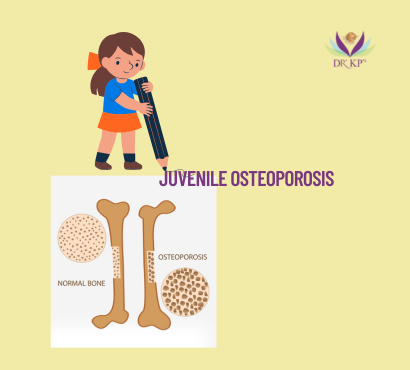
Imagine your active 8-year-old coming home with another fracture from just jumping off the swing. Juvenile osteoporosis turns everyday childhood adventures into potential disasters by weakening bones during crucial growth years. In India, where vitamin D deficiency affects nearly 90% of urban children due to indoor lifestyles and pollution-blocked sunlight, this condition demands urgent parental awareness and proactive steps.
What Makes Bones Fragile in Kids
Children’s bones aren’t static; they constantly remodel, adding mass rapidly between ages 8-14 to form half of their adult skeleton. Juvenile osteoporosis disrupts this, dropping bone mineral density (BMD) below the 3rd percentile for age, leading to fragility fractures from minimal trauma. It splits into two main types: Idiopathic Juvenile Osteoporosis (IJO), which mysteriously appears in otherwise healthy kids aged 2-14 and often resolves post-puberty, and secondary forms triggered by underlying diseases or medications. Boys suffer more in IJO cases before puberty. Unlike adult osteoporosis from menopause or aging, kids’ versions stem from imbalanced bone turnover where breakdown outpaces building.
India faces a rising tide partly because average calcium intake hovers at 400-500mg daily against the recommended 1,000-1,300mg, compounded by lactose intolerance pushing families away from dairy. Urban apartments limit safe sun exposure, critical for vitamin D synthesis, leaving bones starved.
Recognizing Warning Symptoms Early
Symptoms sneak up subtly at first—a limp after playground time, reluctance to run, or complaints of vague leg pain dismissed as growing pains. Then come the fractures: wrist snaps from minor falls, vertebral compressions sparking sudden back pain, or even spontaneous rib cracks. Kyphosis develops as crushed spine bones hunch the posture, stunting height growth. Toddlers might delay walking; older kids tire quickly or develop bowed legs. Swelling stays minimal, so bruises and aches get overlooked until X-rays reveal the truth.
In Indian contexts, parents often confuse early signs with nutritional rickets or vitamin deficiencies, delaying specialist visits. Watch growth charts closely—if height percentiles plummet or fractures recur without major injury, act fast.
Unraveling the Causes and Risks
IJO’s cause remains elusive, possibly linked to rapid pre-pubertal growth spurts overwhelming bone formation, with osteoclasts (bone-breaking cells) going overboard. Secondary juvenile osteoporosis ties directly to culprits like long-term corticosteroids for asthma or juvenile idiopathic arthritis, which can erode 20-30% BMD yearly; malabsorption disorders such as celiac disease blocking calcium uptake; endocrine issues like hyperthyroidism accelerating breakdown; or chronic illnesses including type 1 diabetes and leukemia. Genetic rarities like osteogenesis imperfecta mimic it with collagen defects.
Risk amplifiers in India include sedentary screen time replacing outdoor play, fizzy drinks leaching calcium via phosphoric acid, low birth weight from maternal malnutrition, and passive smoke exposure. Family history doubles odds, but lifestyle tweaks slash them dramatically. Girls often improve post-menarche as estrogen kicks in bone protection.
How Doctors Diagnose It Accurately
Diagnosis starts with history: recurrent low-trauma fractures, family bone issues, or steroid use. X-rays show classic signs—thinned bone cortices, “codfish” vertebrae, or wormian skull fractures. Dual-energy X-ray absorptiometry (DEXA) scans measure BMD with pediatric Z-scores below -2.0 confirming low density; forearm sites avoid spine artifacts from growth plates. Blood tests rule out secondary causes: vitamin D levels (often <10 ng/mL in India), calcium/phosphorus balance, parathyroid hormone, celiac antibodies, and alkaline phosphatase.
Urine markers like NTX/CTX gauge turnover rates. Bone age assessments and rarely, biopsies (showing thin trabeculae) clinch IJO. In resource-limited rural India, basic X-rays and labs suffice initially, with urban centers offering advanced DEXA. Early diagnosis prevents irreversible deformities.Consult pediatric surgeon for comprehensive evaluation.
Comprehensive Treatment Options
Treatment focuses on halting loss and rebuilding: calcium supplements hit 1,200mg elemental daily from chews or fortified juices, paired with vitamin D 2,000-4,000 IU to correct deficiencies boosting absorption 30-50%. Weight-bearing activities like skipping rope, hopping, or supervised trampolining stimulate osteoblasts without overload. Bisphosphonates such as oral alendronate or IV pamidronate shine in severe cases, increasing BMD 15-40% in first year and cutting fractures by half; they’re used cautiously 1-2 years then tapered.
Address root causes—gluten-free diets for celiac reverse losses; steroid-sparing meds for arthritis. Bracing stabilizes spines; physiotherapy builds muscle to protect bones. India’s generic bisphosphonates cost ₹3,000-5,000 per course, making them accessible. Multidisciplinary teams (endocrinologists, rheumatologists, orthopedists) optimize outcomes.
Nutrition Blueprint for Strong Bones
Dairy leads: 500ml milk/curd/paneer daily, or ragi porridge for lactose-averse. Leafy greens like amaranth, fenugreek pack bioavailable calcium; sesame laddoos add magnesium for activation. Sunbathe 15-20 minutes midday on arms/legs weekly. Omega-3 rich walnuts/flaxseeds curb inflammation aiding accrual. Skip colas, excess salt leaching minerals. Small families model meals; schools push mid-morning milk programs raising compliance 40%.
Supplements bridge gaps—kid-friendly gummies ensure adherence. Puberty timing maximizes peak mass, buffering lifelong.
Lifestyle Changes That Make a Difference
Mandate 60 minutes daily active play: cycling, tag, yoga asanas like tree pose for balance. Cap screens at 2 hours; indoor rainy-day jumping jacks work. Post-fracture, early mobilization with braces prevents stiffness. Sleep 10-12 hours unleashes growth hormone. Community parks and school PT build habits. Yoga’s weight-bearing twists strengthen spines safely.
Monsoon-proof: vitamin D lamps for urban high-rises. Track via journals, apps for motivation.
Supporting Families Through the Journey
Emotional toll hits hard—kids miss sports, peers tease “fragile.” Counseling normalizes frustration; sibling education fosters empathy. Schools adapt: front-worn backpacks, excused rough play. Rare Indian support groups connect via social media. Nutritionists customize vegetarian diets; logbooks track progress for docs. Long-term, most resume normalcy. Consult pediatric surgeon for tailored family plans.
Prognosis Hope and Monitoring
IJO resolves spontaneously in 70-90% by late teens as puberty hormones balance turnover. Secondary forms recover 60-80% with cause control. Lifelong monitoring via DEXA every 1-2 years till 25 prevents adult fractures (2x risk). Emerging biologics target osteoclasts precisely. Success stories abound: treated kids excel in athletics. Vigilance turns fragility to resilience.
| Risk Factor Category | Key Examples in India | Mitigation Strategy | Impact on BMD |
| Dietary | Low dairy, vit D lack | Fortified ragi/milk | +20-30% gain |
| Medical | Steroids, celiac | Dose minimize, screen | Halves loss |
| Lifestyle | Sedentary, colas | 60min play daily | Builds 15% peak |
FAQ
- Can juvenile osteoporosis resolve without treatment?
Yes, primary IJO often self-resolves post-puberty in 70-90% cases as growth hormones normalize bone turnover, but monitoring prevents complications during vulnerable years.
- Are bisphosphonates safe for children with low bone density?
Absolutely, short-term use (1-2 years) of pamidronate or alendronate safely increases BMD by 15-40% and reduces fractures by 50% in clinical studies, with minimal side effects when monitored.
- How can Indian parents prevent osteoporosis in kids?
Ensure 1,200mg calcium via dairy/greens, 2,000IU vitamin D with 20min sun exposure, and 60min weight-bearing play daily—these raise peak bone mass by 20%, offsetting genetic and urban risks