
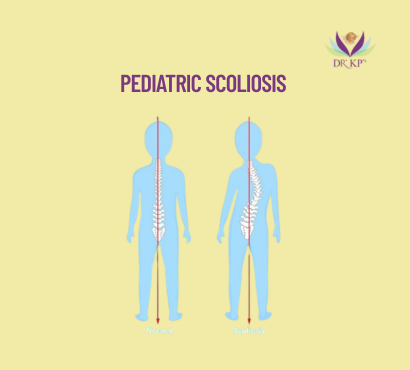
Parents often notice subtle posture changes in their child—uneven shoulders, a tilted waist, or clothes that don’t hang properly. While these signs may seem harmless, they could indicate pediatric scoliosis, a condition characterized by abnormal sideways curvature of the spine.
Scoliosis in children can progress rapidly during growth spurts, making early detection crucial. The reassuring news is that many cases can be managed effectively without surgery when identified early.
Understanding the causes, warning signs, screening methods, and non-surgical management options empowers parents to take timely action.
What Is Pediatric Scoliosis?
Pediatric scoliosis refers to spinal curvature diagnosed in children and adolescents. Instead of a straight vertical alignment, the spine curves sideways, often forming an “S” or “C” shape.
It is categorized based on age:
- Infantile (0–3 years)
- Juvenile (4–10 years)
- Adolescent (11–18 years)
Adolescent scoliosis is the most common type in India.
Causes of Scoliosis in Children
1. Idiopathic Scoliosis
The most common type, with no identifiable cause. It often appears during puberty.
2. Congenital Scoliosis
Present at birth due to abnormal spinal development.
3. Neuromuscular Scoliosis
Associated with neurological conditions affecting muscle control.
In most school-aged children, idiopathic scoliosis accounts for the majority of cases.
Early Warning Signs
Parents should watch for:
- Uneven shoulders
- One shoulder blade more prominent
- Uneven waistline
- One hip higher than the other
- Leaning to one side
- Rib prominence when bending forward
Pain is not usually the first symptom, which makes visual screening important.
Importance of Early Detection
Scoliosis can worsen during rapid growth phases. The earlier it is identified, the higher the chances of controlling progression without surgery.
School screening programs and routine pediatric check-ups play an important role in India, especially during adolescence.
How Is Scoliosis Diagnosed?
1. Physical Examination
The forward bend test is commonly used to detect rib prominence.
2. X-Ray Imaging
Measures the Cobb angle, which determines curve severity.
- Mild: Less than 20 degrees
- Moderate: 20–40 degrees
- Severe: More than 40 degrees
Treatment decisions depend on curve severity and growth potential.
Non-Surgical Management Options
Most mild to moderate cases are treated without surgery.
1. Observation
For mild curves, regular monitoring every 4–6 months is recommended.
2. Bracing
Braces help prevent curve progression during growth.
Bracing is most effective when:
- The child is still growing
- The curve is moderate
- Worn consistently (16–23 hours daily)
3. Physiotherapy
Specialized scoliosis exercises improve posture, muscle balance, and spinal alignment.
4. Postural Training
Encourages awareness and correction during daily activities.
Psychological Impact on Children
Adolescence is a sensitive period. Wearing a brace can affect:
- Body image
- Confidence
- Social interactions
Parental support and counseling play a vital role in emotional well-being.
Lifestyle and Physical Activity
Children with scoliosis can usually participate in:
- Swimming
- Yoga
- Cycling
- Walking
High-impact sports may need evaluation in advanced cases.
Staying active strengthens core muscles and supports spine health.
When Is Surgery Considered?
Surgery is recommended only when:
- The curve exceeds 40–50 degrees
- Rapid progression occurs
- Breathing function is affected
However, many children never require surgery if managed early.
Long-Term Outlook
With early detection and proper management:
- Most children lead normal lives
- Curve progression can be controlled
- Physical activity remains possible
Regular Pediatric follow-up is essential until skeletal maturity.
Conclusion
Pediatric scoliosis may sound alarming, but early detection changes the outcome dramatically. Parents should remain attentive to posture changes during growth years. Routine screening, timely bracing, physiotherapy, and emotional support form the foundation of non-surgical management.
The key is awareness and consistency. With proper care, children with scoliosis can grow, play, and thrive confidently.
FAQ
1. Can scoliosis correct itself as a child grows?
Mild curves may remain stable, but most do not self-correct. Monitoring is essential.
2. Does scoliosis cause back pain in children?
Pain is uncommon in early stages but may appear in severe cases.
3. How effective is bracing in India?
Bracing is highly effective in preventing progression when worn consistently during growth years.