
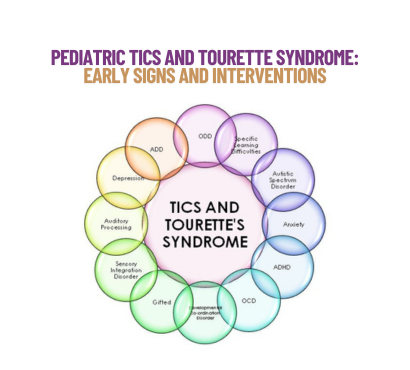
Tics and Tourette syndrome are neurological conditions commonly seen in children. While tics—brief, intermittent movements or sounds—are often transient, Tourette syndrome is identified when a child has both motor and vocal tics for over a year, typically starting between ages 5 and 7 and peaking around 10 to 12. Understanding early signs and timely interventions can relieve anxiety and help children thrive at home and school.
What Are Tics and Tourette Syndrome?
- Tics are sudden, repetitive, involuntary movements or vocalizations.
- Tourette Syndrome (TS) is a chronic neurological disorder marked by at least one motor tic and one vocal tic, present for over 12 months.
- TS tends to be more common in boys (up to 3–4 times) and can present alongside ADHD or OCD.
Early Signs: What Should Parents Watch For?
Common Motor Tics
| Simple tics | Complex tics |
| Eye blinking | Touching or smelling objects |
| Head jerking | Repeating observed movements |
| Shoulder shrugging | Stepping in a certain pattern |
| Eye darting | Obscene gesturing |
| Nose twitching | Bending or twisting |
| Mouth movements | Hopping |
Common Vocal Tics
| Simple tics | Complex tics |
| Grunting | Repeating one’s own words |
| Coughing | Repeating others’ words or phrases |
| Throat clearing | Using vulgar, obscene or swear words (rarely) |
| Barking |
Other signs may include sniffing, whistling, tongue clicking, and making animal sounds or hooting.
Key Points
- Tics can vary in type, frequency, and severity
- Tics worsen with stress, excitement, tiredness, or illness
- Many children experience a premonitory urge—a bodily sensation (itch or tension) before a tic, which brings relief after.
- Tics may be temporarily suppressed but usually reappear later, sometimes more intensely.
Recognizing When Tics May Be Tourette Syndrome
- Tics starting around age 5–7 and becoming complicated or frequent through early teens
- Motor tics generally appear first, followed by vocal tics months or years later
- Tics lasting more than one year (not just weeks or months)
- Multiple tics—changing over time, sometimes in clusters or “waves”
- Impact on school, social life, and family routines
- Presence of ADHD, OCD, anxiety or other behavioral concerns
Diagnosis in Children
- Clinical evaluation: Doctors assess type, frequency, and effect on functioning
- No single test: Diagnosis relies on history, patterns, and ruling out other conditions
- Family and teacher observations are vital; sometimes tics are less obvious at school but more pronounced at home
- Delay in seeking help is common, so awareness matters
Interventions and Support
Behavioral Therapies
- Habit Reversal Training (HRT): Teaches children to recognize the urge before a tic and use a competing response
- Comprehensive Behavioral Intervention for Tics (CBIT): Adds relaxation, trigger management, functional intervention to HRT core
- Exposure with Response Prevention (ERP): Aims to help children endure pre-tic sensations without performing the tic
Medication
- Reserved for severe tics interfering with daily life
- Often used with behavioral therapy for better effect
School and Home Strategies
- Open communication with teachers/caregivers
- Creating safe, non-judgmental environments for tic release
- Educating peers to reduce stigma
- Stress management and regular sleep routines
Addressing Comorbidities
- Screen for, and support, ADHD, OCD, or anxiety
- Family therapy if needed
Early Intervention Benefits
- Fewer complications (emotional, behavioral)
- Better academic and social outcomes
- Reduced caregiver burden
FAQ
- If my child has tics, does it mean they have Tourette syndrome?
Many children have transient tics that resolve within weeks or months. Tourette syndrome requires tics for over one year, affecting both movement and sound, and may include related behavioral symptoms. Persistent, frequent, or distress-causing tics warrant medical evaluation. - Can tics or Tourette syndrome be outgrown or cured?
Tics often peak in early teens and improve in adulthood. While treatment eases symptoms and quality of life, there is no “cure”; many children show significant improvement in adulthood. Supportive therapies make a big difference. - What can parents do at home to help a child with tics or Tourette syndrome?
Keep routines consistent, address stress, and embrace non-judgmental communication. Learn about triggers and work with teachers to make learning environments supportive. Behavioral interventions (like HRT/CBIT) can be started under therapist guidance. Ensure your child feels safe to express tics without fear, especially at home