BLOG
Certain skin marks in children are more than simple birthmarks. In some cases, they may indicate underlying neurological conditions affecting the brain, spinal cord, nerves, or eyes. These conditions are known as neurocutaneous syndromes. Neurocutaneous syndromes are genetic disorders that affect both the skin and nervous system. Because the skin and brain develop from the […]
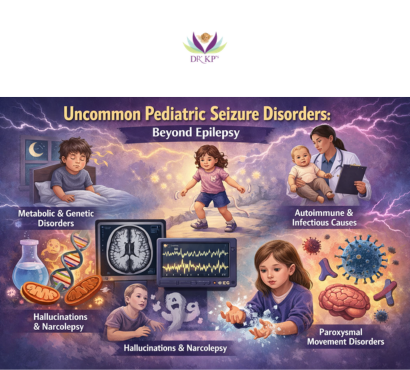
Seizures in children are often immediately associated with epilepsy. However, not all seizures are caused by epilepsy. Several uncommon pediatric seizure disorders can mimic epilepsy but arise from different neurological, metabolic, genetic, or psychological causes. Understanding these conditions helps parents seek timely evaluation, avoid misdiagnosis, and ensure children receive the most appropriate treatment. Recognizing seizure-like […]
Feeding and swallowing are essential functions that most people perform without thinking. For infants and children, however, these processes involve a complex coordination of muscles and nerves. When this coordination is disrupted, a child may experience pediatric dysphagia, a condition that makes swallowing difficult or unsafe. Pediatric dysphagia refers to problems with chewing, swallowing, or […]
Liver diseases in children are often unexpected and difficult for families to understand. One such condition that requires early attention is autoimmune hepatitis (AIH)—a chronic disease where the body’s immune system mistakenly attacks the liver. While it may sound alarming, the good news is that with timely diagnosis and proper treatment, children with autoimmune hepatitis […]
Parents often notice subtle posture changes in their child—uneven shoulders, a tilted waist, or clothes that don’t hang properly. While these signs may seem harmless, they could indicate pediatric scoliosis, a condition characterized by abnormal sideways curvature of the spine. Scoliosis in children can progress rapidly during growth spurts, making early detection crucial. The reassuring […]
Imagine your active 8-year-old coming home with another fracture from just jumping off the swing. Juvenile osteoporosis turns everyday childhood adventures into potential disasters by weakening bones during crucial growth years. In India, where vitamin D deficiency affects nearly 90% of urban children due to indoor lifestyles and pollution-blocked sunlight, this condition demands urgent parental […]
What is Cyclic Vomiting Syndrome? Cyclic Vomiting Syndrome (CVS) is a functional gastrointestinal disorder where children experience sudden, repeated episodes of severe vomiting that start and stop abruptly, with symptom-free periods in between. Unlike typical stomach bugs, CVS episodes follow a predictable pattern lasting hours to days, then complete recovery. Most common in children aged […]
What are developmental milestones? Every child learns to move, think, communicate and interact with the world at their own pace, but there is still a broad pattern to how development happens. These expected skills or behaviours at certain ages are called developmental milestones. Parents often notice them in small, heart-warming moments – a baby’s first […]
Childhood vasculitis is a group of rare disorders in which a child’s immune system mistakenly attacks blood vessels, causing inflammation and damage in organs such as the skin, kidneys, intestines, lungs, brain, and heart. Because symptoms can look like many common illnesses—fever, rash, joint pains, tummy ache—it is often missed or diagnosed late. In India, […]
Across Indian cities and even smaller towns, more children are growing up with extra weight, less outdoor play, and diets heavy in refined carbs and sugary drinks. Behind this pattern sits a silent threat: pediatric metabolic syndrome. This cluster of risk factors—high waist circumference, abnormal cholesterol, raised blood pressure, and elevated blood sugar—sets the stage […]
Celiac disease (CD) is an autoimmune disorder triggered by ingesting gluten—a protein found in wheat, barley, and rye—that damages the small intestine’s lining. While traditionally considered a gastrointestinal (GI) disease characterized by diarrhea and failure to thrive, pediatric celiac disease often presents with a wide spectrum of symptoms beyond the gut. Many children with CD […]
Seasonal Affective Disorder (SAD), often called “winter depression” or “seasonal depression,” isn’t just an adult phenomenon—it can affect children and teenagers as well. In India, where cultural myths and climate variations shape our view of mental health and sunlight exposure, this type of depression is often misunderstood, sometimes going unrecognized in children for years. This […]
Hemangiomas, often called “strawberry marks,” are the most common benign tumors in babies. While many resolve naturally, they can sometimes grow quickly or cause complications if located near vital organs, the eyes, or airways. Understanding hemangiomas—when they are harmless, when intervention is needed, and which treatments are available—enables parents and care teams to respond with […]
Tics and Tourette syndrome are neurological conditions commonly seen in children. While tics—brief, intermittent movements or sounds—are often transient, Tourette syndrome is identified when a child has both motor and vocal tics for over a year, typically starting between ages 5 and 7 and peaking around 10 to 12. Understanding early signs and timely interventions […]
Digestive health plays a crucial role in every child’s energy, immunity, and overall growth. In recent years, Indian parents and pediatricians have increasingly turned their attention to probiotics and prebiotics—two naturally occurring elements in food and supplements that support a healthy gut. But what exactly are probiotics and prebiotics? Why are they trending among Indian […]