
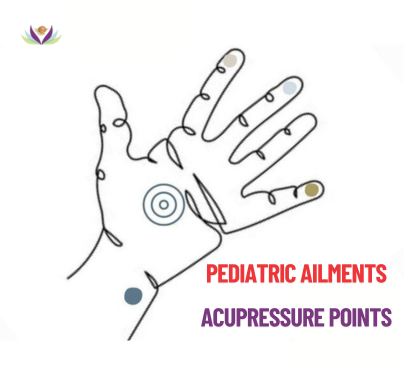
Parents across India often prefer gentle home remedies for common pediatric issues. Acupressure, using finger pressure on specific points, supports circulation, eases symptoms, and boosts natural healing—without medications. It’s completely safe, non-invasive, and easy to learn.
2 | How Acupressure Works in Children
In traditional healing, each body point is linked to energy lines (meridians). Proper stimulation balances energy flow, improving organ and immune function. Modern theories suggest it triggers the release of endorphins and calms the nervous system—ideal for kids.
3 | Safety First
- Always use gentle pressure (like pushing a balloon).
- Avoid patent or open skin, fever >100°F, or serious medical issues.
- Talk to a pediatrician before trying on infants under six months.
4 | Key Acupressure Points & Techniques
A. LI4 (Hegu) – For fever, headache, immune support
Location: Web between thumb & index finger
Technique: Gently squeeze for 1–2 minutes on each hand, once/twice daily
Effect: Reduces fever, boosts immunity, calms irritability
B. ST36 (Zusanli) – General wellness & digestion
Location: Four finger widths below kneecap on outer shin; lateral to shinbone
Technique: Press 1–2 minutes per leg once daily
Effect: Enhances digestion, energy, immunity
C. CV12 (Zhongwan) – For indigestion, stomach discomfort
Location: Midline of upper abdomen, halfway between navel and breastbone
Technique: Light circular massage for 1 minute
Effect: Eases colic, bloating
D. CV6 (Qihai) – Reproductive, immunity & tiredness
Location: Two finger widths below navel
Technique: Press gently in a circular motion for 1 minute
Effect: Reduces fatigue, supports digestion
E. P6 (Neiguan) – For nausea, vomiting
Location: Three finger widths above wrist crease between tendons
Technique: Gentle circular massage for ~30 seconds
Effect: Relieves motion sickness, colic
F. Ear points (Shenmen) – Ear pain, anxiety
Location: Triangular depression on upper ear edge
Technique: Press gently for 30 seconds/side
Effect: Reduces earache and anxiety
G. Spinal points – For cough, cold, spine health
Location: Along mid-back, next to spine
Technique: Gentle thumb pressure up and down spine
Effect: Encourages respiratory and immune function
5 | Step-by-Step at-Home Routine
- Clean hands and position child comfortably (sitting or reclined)
- Start with calming breathing, shoulder squeezes
- Sequence points: LI4 → ST36 → CV12/6 → P6 → spinal points → ear
- Use gentle, steady pressure; avoid overlapping points
- Finish with 2–3 minutes of light belly rub clockwise
Tip: Sing a soft rhyme or play gentle music for comfort.
6 | When & Why to Use Acupressure
- Colic or constipation – use CV12, CV6, P6
- Cold, cough, mild fever – apply LI4, spinal points
- Ear pain, teething – try ear Shenmen, LI4
- General wellness – ST36 daily
Continue for 3–5 days; if symptoms persist, consult a physician.
7 | Benefits of Regular Use
- Non-invasive and safe
- Can be done anytime
- Reinforces parent-child bonding
- May reduce need for OTC medication
- Has minimal side effects
Acupressure offers a safe, nurturing way to support a child’s health—whether it’s relief from colic, digestion, minor fever, or ear discomfort. With education and gentle technique, parents across India can build a daily routine that promotes healing and calm with just fingertip touch and love.
FAQs
Q1. How often can kids have acupressure?
No strict limits—daily sessions are fine if gentle. For illnesses, use points 2–3 times/day until improved.
Q2. Will acupressure replace medications?
It supports symptom relief and wellness, but moderate or severe conditions should still undergo medical evaluation.
Q3. Can newborns receive acupressure?
For babies under six months, use only very gentle light touch on safe points like ST36 or CV6, and consult a pediatrician first.